
Open energy atlas · 16 sources · 214 countries · 110 calculators
Every energy source on Earth, measured and explained.
From crude oil and LNG to rooftop solar and green hydrogen: live Malaysian pump prices, market benchmarks, data for 214 countries and 110 free calculators. Every number is sourced, and every calculation is a link you can share.
- RON95 BUDI95RM —
- RON95RM —
- RON97RM —
- Diesel (Peninsular)RM —
- Diesel (East MY)RM —
- World power 202531,772 TWh
- Renewables33.8%
- Solar growth+30%
- Grid CO₂458 g/kWh
16 sources, one platform
Every energy source
Each source has its own dashboard with production, consumption, trade, prices and country rankings.
Snapshot
The world’s power system in 2025
Electricity generation by source, 2025
- Coal33%
- Gas21.8%
- Oil2.6%
- Nuclear8.8%
- Hydro14%
- Wind8.5%
- Solar8.7%
- Bioenergy2.2%
- Other renew.0.3%
Primary energy by source, 2024
- Coal25.9%
- Gas23.4%
- Oil31.3%
- Nuclear3.9%
- Hydro6.1%
- Wind3.5%
- Solar2.9%
- Bioenergy0.8%
- Other renew.1.4%
Source: Ember and Energy Institute via Our World in Data (CC BY 4.0). Primary energy uses the substitution method.
Free tools
Calculators for every energy question
TNB bill calculator
Enter your monthly kWh to see your TNB bill under the current domestic tariff: energy, capacity and network charges, EEI rebate, AFA, retail charge, KWTBB and SST. SESB and Sarawak Energy included.
SolarSolar panel output & payback
Simulates every hour of a full year at your exact location using NASA satellite weather, then turns the energy into savings, payback time and CO₂ avoided.
live data Home energyElectricity bill calculator
Build your household electricity bill from the appliances you actually use (or from your kWh), with flat, tiered or day/night tariffs, standing charge, levies and VAT. See which devices drive the cost.
Oil, fuel & drivingTrip fuel cost
Enter the distance, your car’s fuel economy in any unit (L/100 km, km/L or mpg) and the pump price to get the fuel needed, the cost of the trip, the share per passenger and the CO₂ it emits.
EV & transportEV vs petrol car (TCO)
Compares an electric car with a petrol car over the years you keep it: purchase and subsidies, energy, maintenance, insurance, tax and resale value. It adds lifecycle CO₂ (including battery manufacturing and your grid’s carbon intensity) and the break-even mileage for both money and emissions.
Heating & gasHeat pump running cost
Models an air-source heat pump month by month for your climate: heat demand, COP at every outdoor temperature and flow temperature, electricity use, running cost versus your current boiler and CO₂ saved.
Markets
Prices & markets
Benchmark prices for crude oil, natural gas, coal, wholesale power and carbon, with history and plain explanations of what moves them.
Markets overview →Malaysia & ASEAN
The Malaysia energy hub
Weekly RON95, RON97 and diesel prices from data.gov.my, the TNB domestic tariff, Solar ATAP and net energy metering, and how Malaysia generates its electricity compared with its ASEAN neighbours.
- Fuel pricesRON95, RON97 and diesel, weekly
- Electricity in MalaysiaGeneration mix and demand
- TNB tariffDomestic rates and bill breakdown
- Solar in MalaysiaSolar ATAP, NEM and yields
- ASEAN energyMalaysia and its neighbours
- Coal44.6%
- Gas33.8%
- Oil1%
- Hydro17.5%
- Solar2.2%
- Bioenergy0.9%
Interactive
Maps
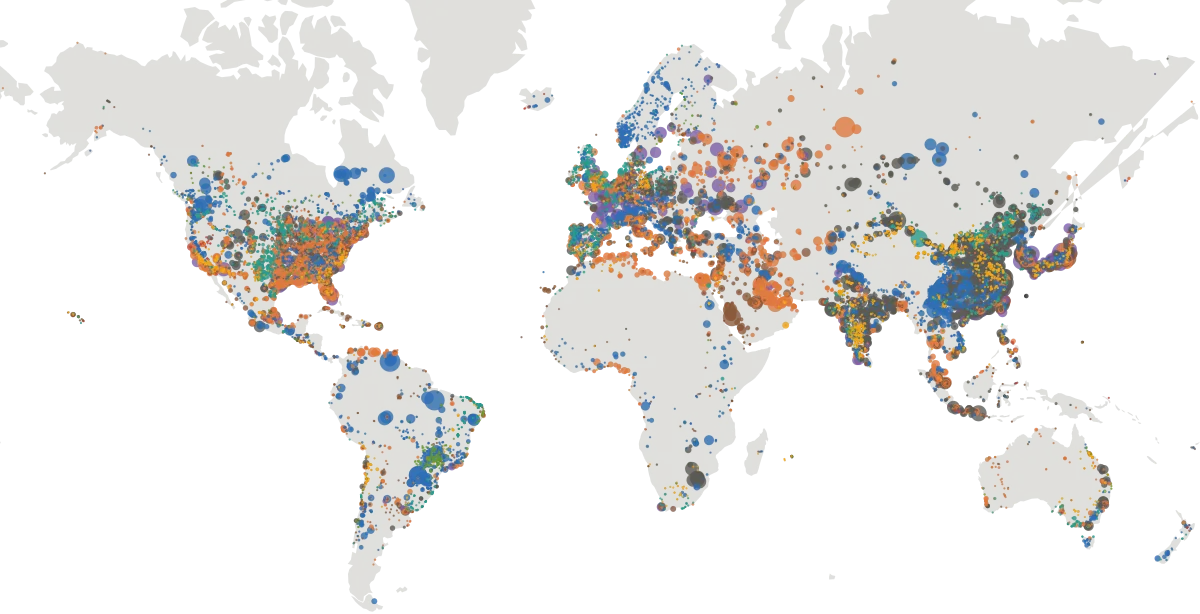 34,936 power plantsEvery major plant on Earth, filter by fuel
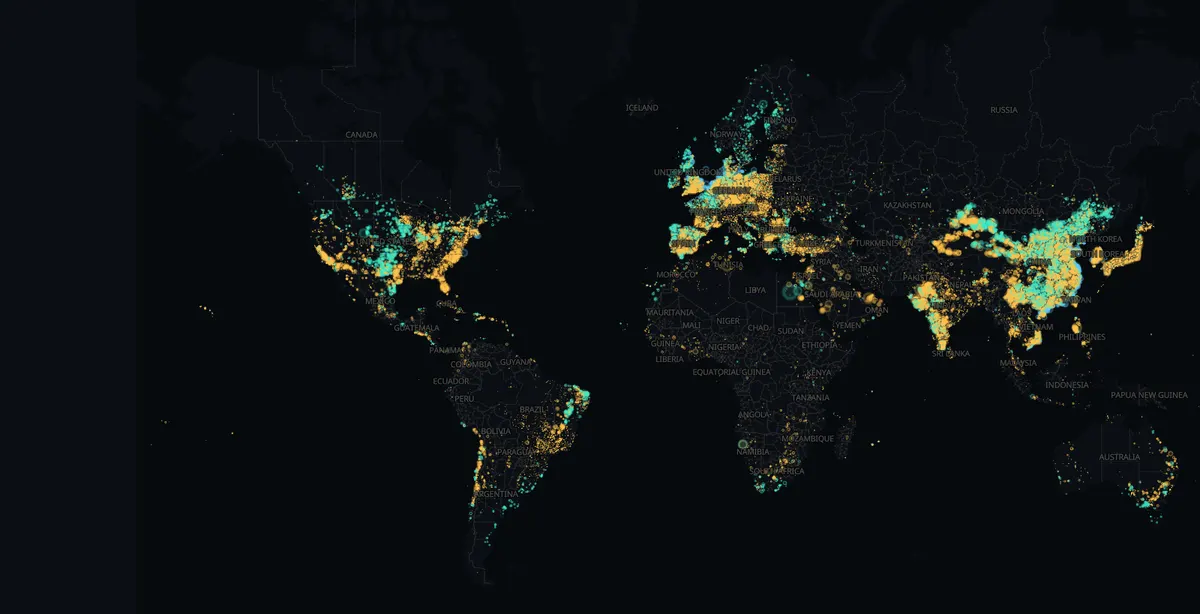 122,938 solar & wind farmsNight atlas with build-up timeline
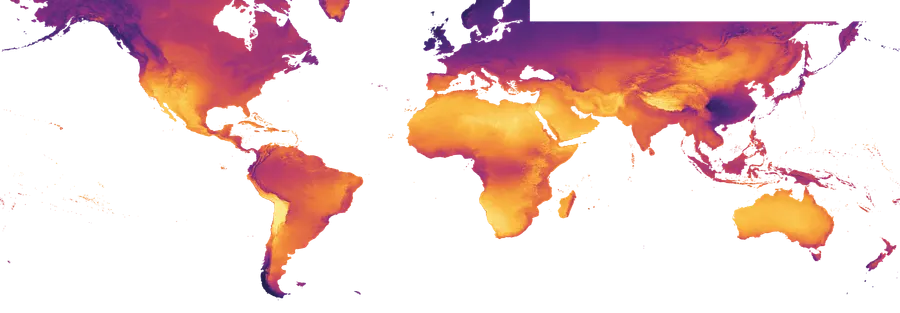 Solar potential~4 km resolution, kWh/kWp per day
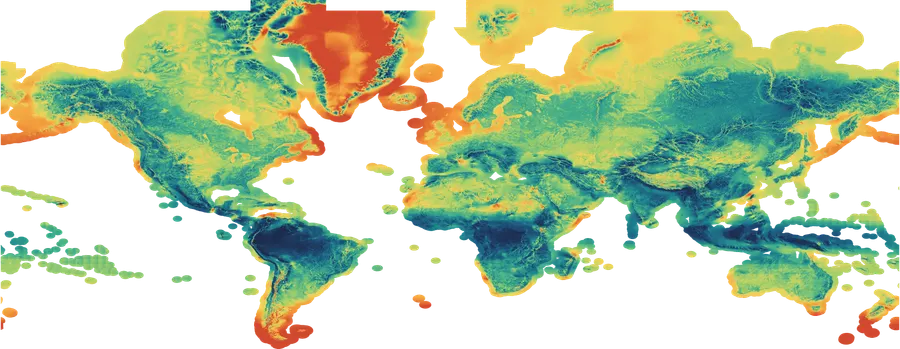 Wind potentialMean wind speed at 100 m
Data
Leaderboards
Most renewable grids
Countries generating ≥5 TWh/yr · %
Solar champions (share)
Countries generating ≥5 TWh/yr · %
Wind leaders (share)
Countries generating ≥5 TWh/yr · %
Cleanest electricity
Countries generating ≥5 TWh/yr · g/kWh
Country profiles
All 214 countries →Learn
Guides in plain language
How the Oil Price Is Set: Brent, WTI and OPEC+
Who sets the price of oil? Benchmarks like Brent, WTI and Dubai, futures markets, OPEC+ quotas, spare capacity, inventories and the big price shocks since 1973.
NuclearHow a Nuclear Reactor Works: Fission, Steam and Safety
How nuclear reactors make electricity: fission, moderators and control rods, PWR vs BWR vs CANDU vs RBMK, decay heat, safety systems and Gen III+ designs.
Oil & gasThe LNG Value Chain: From Gas Field to Ship to Grid
How liquefied natural gas works: liquefaction trains, −162 °C tankers, FSRUs and regasification, top exporters, Malaysia's Bintulu complex, costs and losses.
Markets & pricesHow Electricity Markets Work: Pools, PPAs and Prices
Integrated utilities, single buyers and liberalised markets compared: day-ahead and intraday trading, nodal vs zonal pricing, PPAs, CfDs, capacity markets.
Asia & MalaysiaHow Malaysia's Electricity System Works: TNB, SESB, SEB
Malaysia's three power grids, the Single Buyer, IPPs, the regulator, generation mix, how TNB tariffs and the fuel adjustment are set, and what CRESS changes.
Asia & MalaysiaMalaysia's Energy Transition: NETR Targets Explained
Malaysia's National Energy Transition Roadmap in plain numbers: 70% renewable capacity by 2050, coal phase-out, flagships, Solar ATAP, CRESS and hydrogen.
Built on open data
Every figure on Energy.co.my comes from a public, openly licensed dataset and is cited on the page where it appears. Methodology & sources →
- Our World in Data
- Ember
- Energy Institute
- data.gov.my
- NASA POWER
- WRI Power Plant Database
- Global Energy Monitor
- Global Solar & Wind Atlas
- World Bank